
Ethernet-APL (Advanced Physical Layer) is an industrial communication technology built on the IEEE 802.3cg 10BASE-T1L Single Pair Ethernet standard. Engineered specifically for process automation and hazardous-area applications, it delivers secure, high-performance Ethernet connectivity directly to field-level devices. By transmitting both power and data over a single twisted-pair cable, Ethernet-APL simplifies industrial network infrastructure, reduces installation costs, and accelerates deployment. Supporting full-duplex 10 Mbps communication across distances of up to 1,000 meters, Ethernet-APL provides a scalable, reliable foundation for Industrial Network Optimization, enabling seamless connectivity for modern field instruments and Industry 4.0 environments.
What Makes Ethernet-APL Essential for Industrial Networks

Simplified Two-Wire Cabling
A single twisted-pair cable is all Ethernet-APL needs, cutting material costs and streamlining field installations for leaner, faster industrial network rollouts.

Combined Power and Data Delivery
By carrying power and data across the same twisted pair, Ethernet-APL removes the need for separate power wiring throughout industrial process environments.

High-Speed Field-Level Connectivity
With full-duplex speeds reaching 10 Mbit/s, Ethernet-APL outpaces legacy field communication protocols by more than 300 times, unlocking faster process data exchange.
Extended Cable Reach
Ethernet-APL maintains stable, uninterrupted communication across cable runs of up to 1,000 meters, ideal for sprawling plant and process facilities.

Built-In Explosion Protection
Engineered with intrinsic explosion-protection safeguards, Ethernet-APL is purpose-built for dependable deployment in hazardous, potentially explosive industrial zones.
Ethernet-APL vs. Single Pair Ethernet: Key Differences Explained
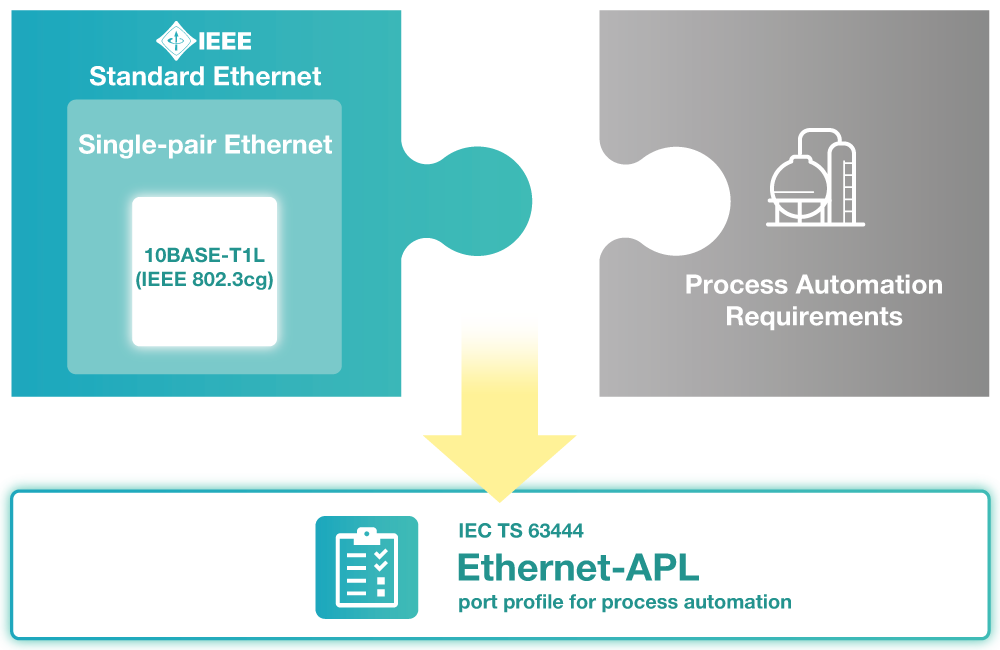
Defined under IEC TS 63444:2023, Ethernet-APL builds on the IEEE 802.3cg 10BASE-T1L single-pair Ethernet (SPE) foundation, tailoring it specifically to the demanding requirements of process automation across industries such as oil and gas, chemical processing, and pharmaceuticals. This purpose-built profile enables field instruments to connect directly into industrial Ethernet networks through several defining capabilities:
- Standardized Power Delivery: Delivers both power and data simultaneously over a single twisted-pair cable using predefined, industry-recognized power classes.
- Hazardous Area Protections: Built-in safety mechanisms support deployment in classified hazardous locations, covering both intrinsically safe (CID2 Zone 0/1) and non-intrinsically safe (CID2 Zone 2) installations.
- Streamlined Field Connectivity: Clearly defines electrical parameters, network topology rules, port classifications, and device roles to ensure consistent, dependable field-level installations.
How Ethernet-APL Is Transforming Industrial Network Optimization
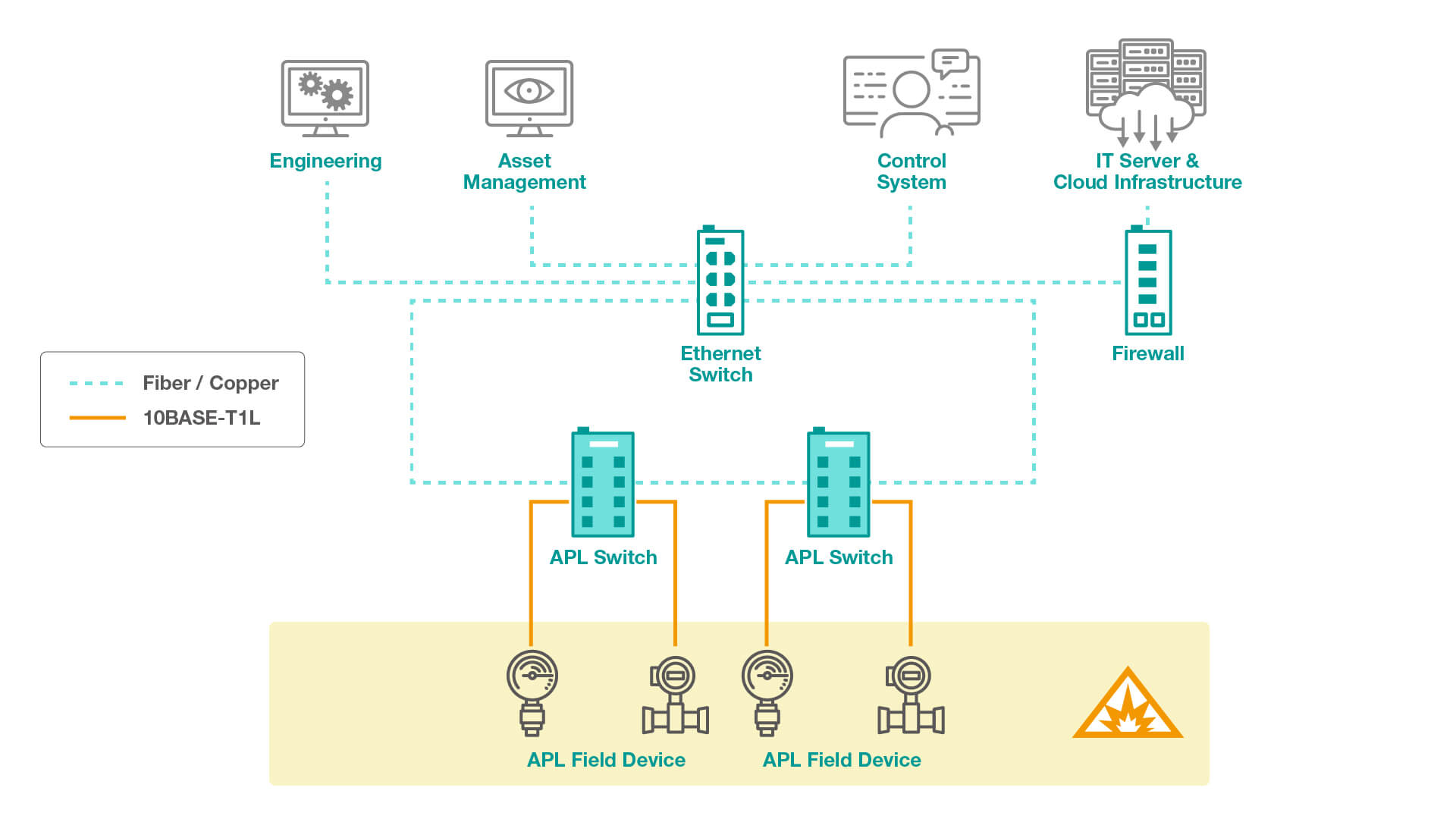
Ethernet-APL is redefining industrial network optimization by extending high-speed Ethernet connectivity directly to field-level devices in process automation environments. Built on the Single Pair Ethernet (SPE) standard, it combines reliable data communication and power delivery over a single twisted-pair cable while meeting the stringent safety requirements of hazardous locations. With support for explosion-protected installations, Ethernet-APL enables seamless integration of field instruments, controllers, and industrial Ethernet networks. The result is a scalable, future-ready communication infrastructure that improves operational efficiency, enhances plant safety, and accelerates digital transformation across modern industrial facilities.
Industrial Applications of Ethernet-APL
Ethernet-APL is purpose-built for process industries that require secure, long-distance, and highly reliable industrial communication. Sectors such as oil and gas, chemical processing, mining, pharmaceuticals, and water treatment rely on Ethernet-APL to deliver robust connectivity in demanding and hazardous environments. By extending Single Pair Ethernet (SPE) to the field level, Ethernet-APL enables seamless integration of intelligent field devices, improves industrial network optimization, enhances operational safety, and supports the digital transformation of modern process automation systems.

Key Requirements:
- Dependable, round-the-clock performance capable of withstanding harsh and hazardous process environments.
- Support for large-scale deployments and remote field installations across expansive industrial sites.
- Continuous, real-time visibility into field-level monitoring and control processes.
Why Ethernet-APL Delivers:
- Explosion-Protected Design: Purpose-built for hazardous locations, Ethernet-APL supports safe, reliable operation in explosive atmospheres commonly found in oil and gas, mining, and chemical processing facilities.
- Extended-Range Connectivity: Supporting cable runs of up to 1,000 meters, Ethernet-APL links distributed field instruments across large industrial footprints without signal degradation.
- Real-Time Data Performance: Delivering data rates of up to 10 Mbit/s, Ethernet-APL surpasses conventional field communication protocols, enabling faster data acquisition, more precise control, and improved operational decision-making.
Frequently Asked Questions About Ethernet-APL
Ethernet-APL is revolutionizing industrial communication by delivering reliable, high-speed data over long distances in harsh environments. This FAQ section aims to answer some common questions about Ethernet-APL.
Ethernet-APL's distinct architecture calls for purpose-built, APL-compatible hardware to fully realize its performance advantages — including APL field instruments such as sensors and actuators, alongside dedicated APL switches for network communication. Because these devices are natively compatible, additional function-specific components like gateways or field barriers become unnecessary, resulting in a leaner, more streamlined network infrastructure.
Legacy 4-20mA technology is constrained by limited data throughput and rigid point-to-point wiring. Ethernet-APL overcomes these limitations with significantly higher data rates, flexible network topologies, and native compatibility with existing IT infrastructure. This positions Ethernet-APL as the preferred foundation for modern process automation deployments that demand real-time control, advanced data analytics, and seamless interoperability across diverse field devices and systems.
Hazardous industrial zones often contain explosive gases, vapors, or combustible dust, making specially certified communication equipment essential for preventing ignition risks and maintaining safe operations.
While traditional fieldbuses have long enabled field-level digital communication, they're often held back by added complexity, constrained data rates, limited scalability, and interoperability challenges that slow broader adoption. Ethernet-APL, by contrast, is built on standard Ethernet protocols, delivering higher throughput and more straightforward integration with strong protocol compatibility. The result is a modernized approach to field-level connectivity that simplifies deployment while boosting overall network performance.
As a protocol-independent physical layer, Ethernet-APL provides a flexible foundation capable of supporting a wide range of industrial Ethernet protocols, including PROFINET, EtherNet/IP, HART-IP, and OPC UA. Although Ethernet-APL itself doesn't govern application-layer compatibility, standards organizations continue working to align these protocols with APL technology. This ongoing standardization effort establishes Ethernet-APL as a future-ready platform for delivering interoperable, high-performance communication across process automation networks.
Moxa Ethernet-APL for Process Automation
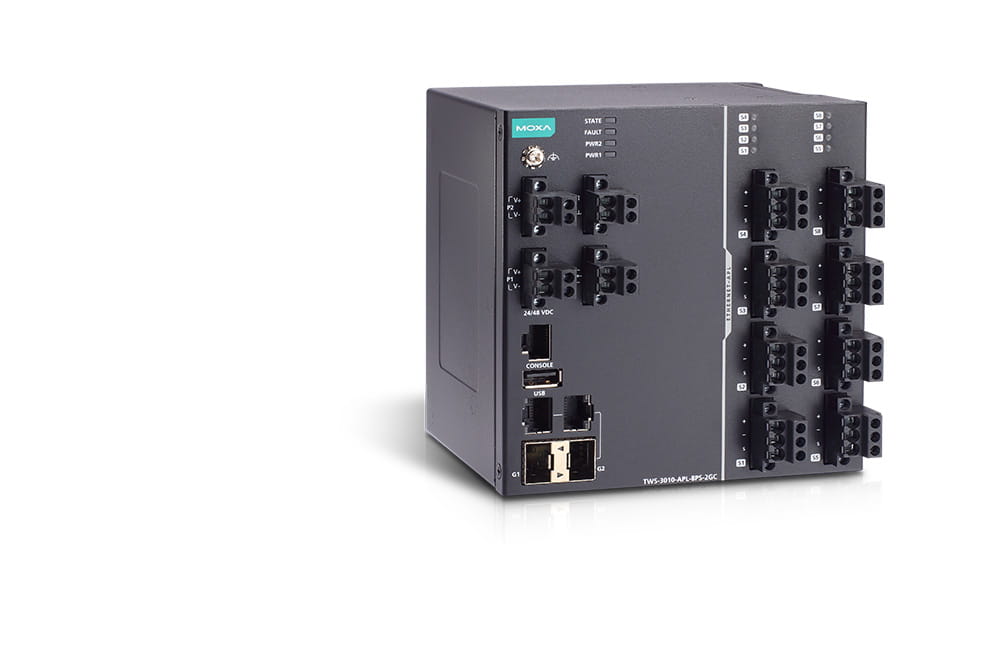
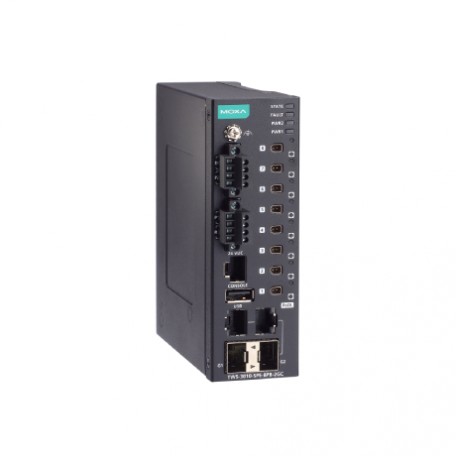
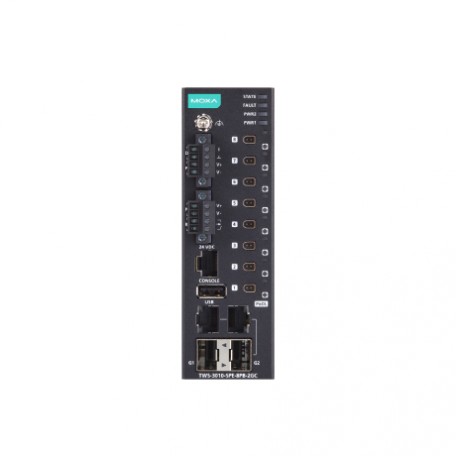
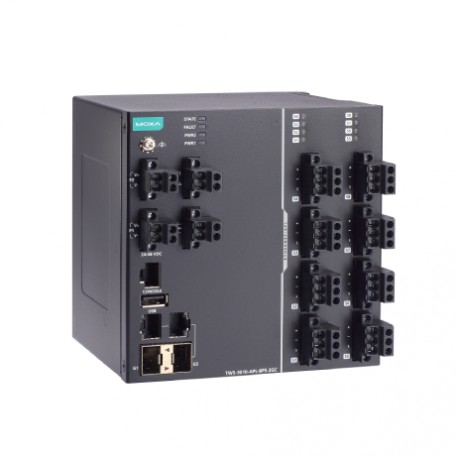
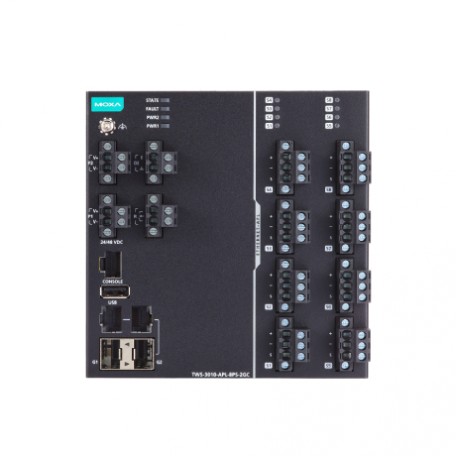
TWS-3010-APL Series
Managed Ethernet switch delivering 8 Ethernet-APL spur ports and 2 1GbE uplink ports for streamlined process automation connectivity
Features and Benefits
- 8 spur ports built on the IEEE 802.3cg 10BASE-T1L Ethernet-APL standard
- Ethernet-APL Power Classes A and C supported on every spur port
- Space-saving, compact form factor for fast, flexible field installation
- Broad industrial protocol support, including EtherNet/IP, PROFINET, and Modbus TCP
Reach Out to the Easy World Team
automation networks call for the right expertise, not guesswork. The Easy World team can help you identify the ideal Ethernet-APL switch, verify compatibility with your safety classification, and recommend supporting products suited to your field environment — all backed by expert consultation.
Related Products